

Does Your Company Run on Comic Book Psychology?
The Hidden Cost of Running 2026 Talent on 1928 Software

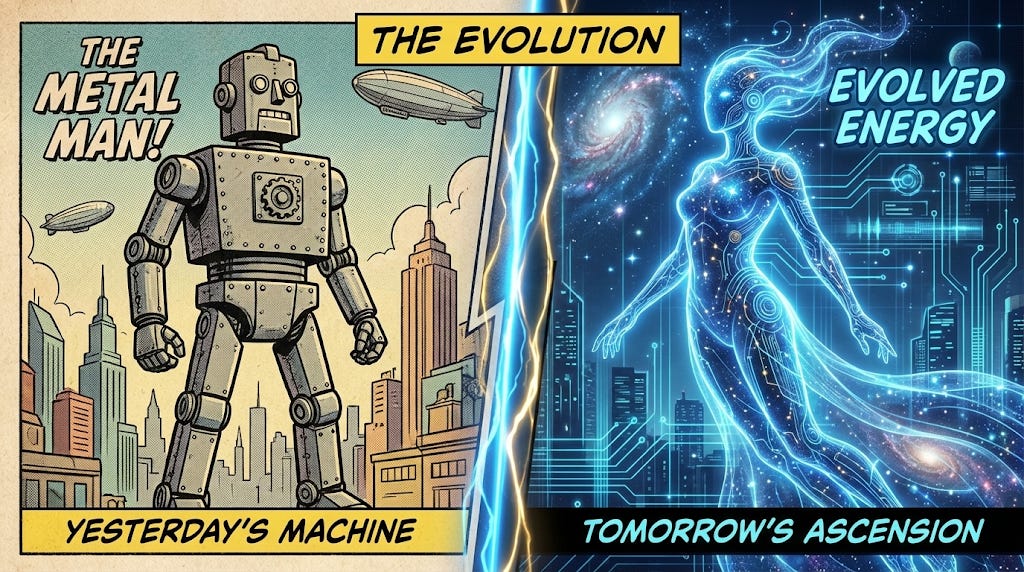
1928 was quite a year.
Micky Mouse made his debut in Steamboat Willie.
Sliced bread was sold for the first time.
Penicillin was discovered.
And a brilliant, eccentric psychologist named William Moulton Marston published Emotions of Normal People.
This book introduced the world to DISC profiling.
It gave us the Red, Blue, Green, and Yellow quadrants that still decorate thousands of HR PowerPoint slides today. For nearly a century, we’ve been putting our people in these boxes. “She’s a High D.” “He’s a High S.” It’s comfortable. It’s easy. It’s a great shorthand.
But Marston was a busy man. He didn’t just invent the four communication styles. He also had two other significant “contributions” to human culture that usually get left out of the corporate training manual:
He helped invent the systolic blood pressure test, which became the key component of the modern Polygraph (Lie Detector).
He created Wonder Woman. Seriously, he did.
Yes, the same mind that decided you were a “High D” also decided that an Amazonian princess needed a “Lasso of Truth” to force honesty out of criminals. Marston was fascinated by dominance, submission, and induction. His theories were revolutionary for the Jazz Age.
But so was the Model T Ford.
You wouldn’t drive a Model T to work today.
You wouldn’t let a dentist use 1928 equipment on your teeth.
You wouldn’t run your finance department on a calculator from the pre-digital era. To be fair, they’re still on Excel 97 (you know, the one with the ‘flight simulator’ “Easter Egg”).
So why are we still running our most complex, expensive asset - our people - on a psychological operating system that pre-dates the colour television?
The Problem with the Box
DISC is a taxonomy. It labels behaviour. It tells you what happened.
“Bob is a High D, so he was blunt in that meeting.”
But it doesn’t tell you why. It doesn’t explain the mechanics. It doesn’t predict how that behaviour changes under pressure, or how to fuel it for long-term performance.
It treats humans as static entities. But you are not a static entity. You are a dynamic energy system.
The same person can be “High D” (Dominant) because they are chasing a promotion (Promotion Focus) OR because they are terrified of losing their job (Prevention Focus).
To DISC, the behaviour looks the same.
To a psychologist, the motivation, and the management strategy required, is completely opposite.
If you treat those two people the same way because they are both “Red,” you will burnout one and disengage the other.
It’s Time for an Upgrade
We need to stop using “personality tests” and start using a Human Operating System.
The STAR Framework isn’t based on the theories of one eccentric genius from the 1920s. It is the integration of the “Immutable Seven” pillars of modern, evidence-based psychology. It doesn’t replace DISC; it swallows it whole and gives it an engine.
Instead of just four letters, STAR gives you the full tech stack of the human mind:
Self-Determination Theory (SDT): The engine of motivation. It explains why we do what we do (Autonomy, Competence, Relatedness).
Regulatory Focus Theory (RFT): The steering wheel. It explains how we approach goals (Promotion vs. Prevention).
The Five Factor Model (OCEAN): The chassis. The gold standard of personality science, measuring the “Big 5” traits with precision DISC can’t match.
Cognitive Bias Theory (CBT): The distortion filter. How our brains consistently misinterpret reality.
Social Identity Theory (SIT): The tribe. How we behave differently in groups vs. alone.
Dual Process Theory (System 1 & 2): The processor. Understanding when we are using intuition vs. logic.
Appraisal Theory of Emotion (AToE): The dashboard. How we evaluate events to generate feelings.
From Label to User Manual
DISC puts you in a box.
STAR gives you the User Manual.
When you upgrade to the Human Operating System, you stop saying “He’s just a High I.”
You start saying: “He has high Relatedness needs (SDT), is Promotion Focused (RFT), and operates primarily in System 1 (Dual Process).”
Suddenly, you don’t just have a label. You have a strategy.
You know exactly how to motivate him, how to correct him, and how to build a team around him that covers his blind spots.
We are living in the age of AI, quantum computing, and genetic engineering.
Stop trying to force 21st-century talent into 20th-century boxes. Use the science that actually explains how human beings work.
Respect the history. Keep the comic books. But for your business?
Upgrade your OS.
#STARFramework #HumanOS #Leadership #Psychology #Marston #DISC #WonderWoman #TeamPerformance #ManagementScience