

Selling Psychological Resolution: The Apple and Nike Case Studies
Activating the Promotion Focus and Hacking System 1

Yesterday, we established that the most successful brands are not selling products. They are selling psychological resolution: relief from a tension that the target audience is already carrying, one that the product can, if the alignment is genuine, actually help resolve.
We introduced the architecture of the Human Operating System: the seven theoretical pillars that explain what the mind is actually running underneath all of its apparent complexity. Self-Determination Theory. Appraisal Theory. Regulatory Focus Theory. Dual Process Theory. Social Identity Theory. These are not abstractions. They are the machinery. And the brands we are examining today are operating on every one of them, whether they have ever named them that way or not.
Today we take two of the most successful marketing campaigns in the last fifty years and examine them layer by layer. We are not here to admire the creativity. We are here to understand the mechanism. Specifically, we are going to see exactly which psychological needs each campaign was resolving, which processing system it was written for, how it handled the tension between different types of audience, and what that means for anyone trying to build something that lasts.
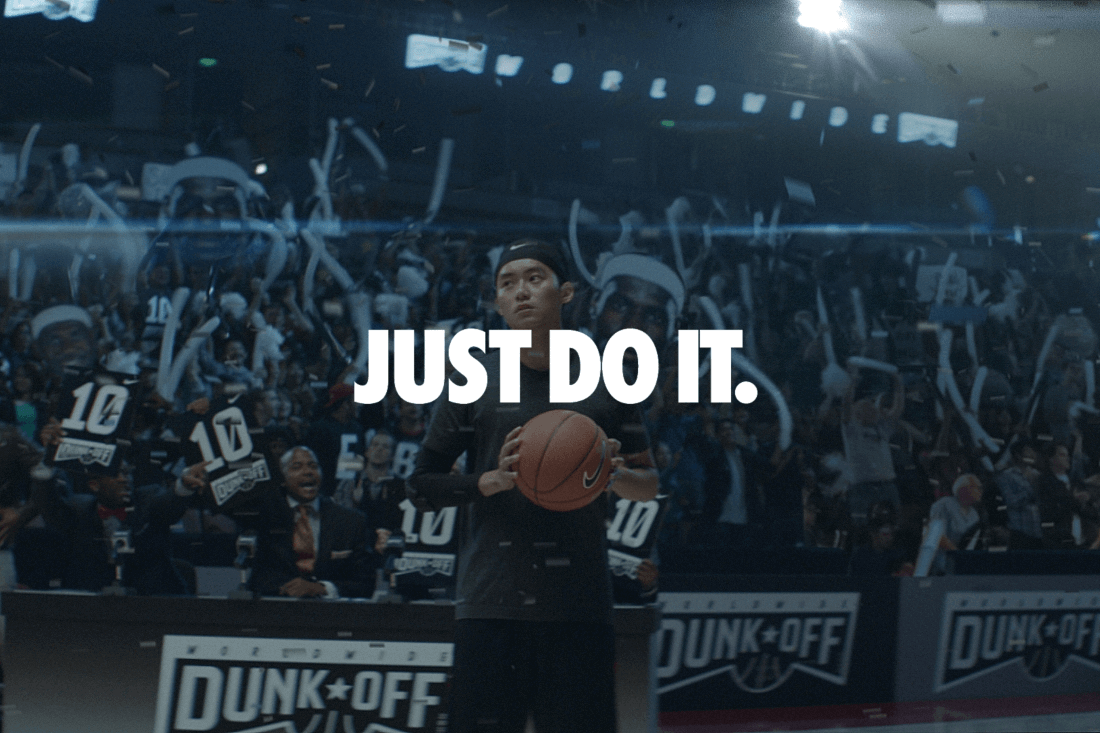
The two campaigns are Apple’s “Think Different” (1997) and Nike’s “Just Do It” (1988). They are separated by a decade. They are operating on different product categories, different audiences, and different creative strategies. And yet, examined through the lens of the Human Operating System, they are solving versions of the same problem. Understanding why that is, and how each does it differently, is the most direct route into the practical mechanics of what psychological alignment in marketing actually looks like when it works.
Apple: “Think Different” and the Identity Offer
In 1997, Apple was weeks from insolvency. The product line was confused. The market share was catastrophic. Steve Jobs had returned to a company that the industry had largely written off, and the first decision he and his agency made was not about the product at all.
It was about who Apple was for.
The campaign that launched in September 1997 did not mention a single specification. It did not show a computer. It did not argue that Apple’s products were faster, cheaper, or more reliable than the competition. It showed a sequence of thirty seconds of archival footage: Einstein. Gandhi. Amelia Earhart. Muhammad Ali. Jim Henson. Picasso. It concluded with a single line of copy and the Apple logo.
Here’s to the crazy ones.
The copy that followed is worth reading slowly:
The misfits. The rebels. The troublemakers. The round pegs in the square holes. The ones who see things differently. They’re not fond of rules. And they have no respect for the status quo. You can quote them, disagree with them, glorify or vilify them. About the only thing you can’t do is ignore them. Because they change things. They push the human race forward. And while some may see them as the crazy ones, we see genius. Because the people who are crazy enough to think they can change the world, are the ones who do.
This is not a product description. It is a mirror. Specifically, it is a mirror positioned to catch the reflection of a very particular self-concept that a very particular segment of the population carries: the person who has always felt slightly misaligned with the mainstream, who has always suspected that the discomfort of thinking differently from the people around them is not a defect but a signal. The campaign took that private, often uncomfortable self-perception and returned it to the person holding it as something not just acceptable but historically significant.
The Promotion Focus activation. Regulatory Focus Theory establishes that some people are running primarily on a growth and gain orientation: a drive toward becoming more, achieving more, being more (Higgins, 1997). The “Think Different” campaign is an almost clinical example of Promotion-focused messaging. It does not offer safety. It does not promise protection or reliability. It invites the audience into a vision of who they could become if they aligned themselves with what the brand represents. The offer is not a product. The offer is trajectory: you, moving in the direction of the kind of person who changes things.
For a Promotion-focused audience, this is the most powerful message that can be sent. It does not ask them to protect something they already have. It shows them something they have always been moving toward, and offers them a vehicle.
The System 1 architecture. The campaign does not make a rational argument. You cannot evaluate “Here’s to the crazy ones” against a competitor’s equivalently strong claim about their own target audience. There is no claim to evaluate. What the campaign does instead is deposit a feeling: the feeling of recognition, of being seen accurately, of having a private self-concept validated by something external and credible. This is a System 1 operation (Kahneman, 2011). It bypasses the evaluative layer entirely, not through deception, but through accuracy. The fastest route to a person’s System 1 is to show them something that reflects them back to themselves more precisely than they expected.
By the time a Promotion-focused, identity-oriented consumer’s System 2 arrives to perform any deliberate evaluation, the System 1 signal is already embedded. The deliberation that follows is not neutral assessment. It is System 2 constructing a rationale for a decision that System 1 has already taken, using whatever materials are available: the product specifications, the price point, the ecosystem. These are real considerations, and they matter. But they are not the cause of the decision. They are its justification.
The Social Identity architecture. The campaign works a second channel simultaneously. Social Identity Theory establishes that humans derive a significant portion of their self-concept from the groups they belong to, and will go to considerable lengths to protect membership in valued groups and resist membership in groups they consider incompatible with their self-perception (Tajfel & Turner, 1979). “Think Different” did not create a customer base. It created a tribe. It took the diffuse, privately-held feeling of “I am not quite like everyone else” and gave it a name, a visual language, and a community of reference. People who bought Apple products in the late 1990s and 2000s were not primarily buying a computer. They were buying confirmed membership in a group defined by the qualities the campaign enumerated: creativity, nonconformity, the willingness to think differently from the people around them.
The depth of this loyalty, which persists decades later and extends to a level of brand advocacy that has no rational basis in product performance, is the direct consequence of Social Identity Theory operating at scale. When someone defends Apple’s choices in a conversation in 2025, they are defending the identity the brand helped them construct. The brand became part of the in-group. Criticism of the brand is processed as criticism of the self. This is not irrationality. It is the completely predictable output of a campaign that understood Social Identity Theory, whether it named it that way or not, and built its message accordingly.
The SDT alignment. At the deepest level, “Think Different” addresses Autonomy directly (Deci & Ryan, 2000). The campaign’s entire implicit argument is that the person choosing Apple is exercising a meaningful form of self-determination: the choice to align with the values of independent thought rather than the mainstream default. The act of purchase becomes a statement of Autonomy, not a consumer decision. And because Autonomy is a genuine, deep psychological need rather than a preference, the satisfaction it delivers is more durable and more viscerally felt than anything a feature comparison could produce.
Nike: “Just Do It” and the Competence Invitation
If Apple’s campaign is about identity at the point of purchase, Nike’s is about identity at the point of action. And the difference between those two moments is everything.
“Just Do It” launched in 1988 as a tagline for a campaign featuring Walt Stack, an 80-year-old man who ran seventeen miles every morning across the Golden Gate Bridge. He was arthritic. He wore full dentures and took them out for longer runs. He spoke to camera with the blunt, unapologetic cadence of someone who has long since stopped caring what anyone else thinks about what he does before breakfast.
The ad ended with three words. No elaboration. No explanation. No product specification.
Just Do It.
The tagline has never been meaningfully updated in thirty-seven years. Not because Nike lacks creativity, but because it solved the problem so completely on the first attempt that any revision would represent a downturn. Understanding why it solved the problem so completely is the most instructive exercise in the practical mechanics of psychological alignment in marketing.
The universal Competence tension. Self-Determination Theory identifies Competence as one of the three fundamental psychological needs: the drive to develop mastery, to improve, to close the gap between where you currently are and what you are capable of (Deci & Ryan, 2000). Every person who has ever considered exercising and then not exercised is experiencing a Competence gap: they know what they are capable of in principle, and they are currently located at some distance from it in practice. The gap is uncomfortable. The discomfort is not motivating in any simple way; it is also shameful, discouraging, and easy to rationalise away.
“Just Do It” does not offer to close that gap for you. It does not promise that Nike’s products will make exercise easier, more rewarding, or more efficient. What it says is: the gap exists, you know it exists, and the only relevant variable is whether you are going to act on that knowledge or not. The three words remove every available excuse simultaneously. Not because they argue against them, but because they decline to acknowledge them. They address the person at the moment of the gap, and the message is: the gap is not the issue. The decision is the issue.
The Promotion focus and the fear of inaction. Unlike Apple’s campaign, which is purely Promotion-focused, “Just Do It” operates on both motivational orientations simultaneously, which is one of the reasons for its extraordinary breadth of appeal. For a Promotion-focused audience, it is an invitation: the move toward a better version of yourself is available right now, in this decision, in this moment. There is no better time. Do it.
For a Prevention-focused audience, it activates the fear of inaction rather than the aspiration of achievement. The implicit message for someone whose dominant orientation is loss prevention is: the cost of not doing this is the version of yourself you are declining to be. That is a loss. Not a foregone gain, but an actual loss, of health foregone, capacity declined, the self you could have been and chose not to be. “Just Do It” speaks to that awareness without sentimentality or judgment. It simply names the choice.
The System 1 mechanism: the absence of deliberation. The most technically interesting thing about “Just Do It” as a piece of marketing communication is that it does not give System 2 anything to process. There is no argument to evaluate. There is no claim to weigh against a competitor’s equivalent claim. There is no specification to compare. There is only the tagline, the brand mark, and the expectation that the person encountering it already knows what the relevant question is.
This is System 1 marketing at its most precise (Kahneman, 2011). The tagline does not create the emotion. It arrives into an emotion that the audience is already carrying, the specific discomfort of knowing what you should do and not doing it, and it makes a sound that the emotion recognises. The recognition is instantaneous, which is why no amount of logical processing subsequently modifies it. There is nothing to modify. The message arrived below the level at which modification operates.
The Appraisal shift. What “Just Do It” achieves at the level of Appraisal Theory is a reframing of the coping calculation (Lazarus, 1991). Appraisal Theory holds that emotion is shaped by two simultaneous evaluations: how significant is this to something I care about, and do I have the resources to meet it? The standard appraisal of exercise for most people identifies it as both highly relevant and costly: it matters, but it requires effort, time, discomfort, and willpower that the person is uncertain they currently possess. The result is the particular stasis of someone who cares about something and does not quite believe they are capable of doing it.
“Just Do It” does not lower the perceived cost. It reassigns the question. It is not asking whether you have enough motivation. It is asserting that the question of motivation is not the relevant question. The relevant question is simpler, and binary: will you, or won’t you? This appraisal shift is small but structurally significant. It moves the person from “Can I do this?” to “Will I do this?” and in doing so, it replaces an uncertainty (capacity) with a choice (decision). Choices feel more actionable than uncertainties. The campaign is not making exercise feel easier. It is making the decision feel more available.
The Contrast: Two Campaigns, One Operating System
Apple and Nike are solving different versions of the same fundamental marketing problem: how do you reach the mind that actually makes decisions, at the level where decisions are actually made, with a message that is specific enough to land but broad enough to travel?
Apple’s answer is identity: show the audience a precise mirror of who they believe themselves to be, and give them something to buy that confirms the self-perception. The entry point is the self-concept. The mechanism is Social Identity Theory and Autonomy. The orientation is Promotion. The system it speaks to first is System 1.
Nike’s answer is the decision point: find the exact moment of gap between the person’s knowledge of what they are capable of and their current behaviour, and address that moment with such precision that the argument for delay collapses. The entry point is the gap between current and possible self. The mechanism is Competence and the reframed appraisal. The orientation is simultaneously Promotion and Prevention. The system it speaks to first is System 1.
Neither campaign talks about a product. Neither campaign makes a rational argument that a consumer could meaningfully evaluate. Both campaigns arrived into a psychological need that a segment of the population was already carrying, and offered something that resonated with that need so precisely that the emotional signal it deposited has, in both cases, proven more durable than any competitor’s rational counter-argument has managed to be in the decades since.
This is not fortune. It is architecture.
What This Means for Anyone Building a Brand
The practical implication of the Apple and Nike cases is both simple and consistently underused: the question your marketing needs to answer is not “what does this product do?” It is “what psychological need does this product serve, and which system in the audience’s mind is carrying that need right now?”
Once you have an accurate answer to the second question, the creative execution is a problem of translation rather than invention. You are not trying to construct emotion from scratch. You are trying to recognise the emotion that is already present in the audience, name it with enough precision that the recognition arrives at the System 1 level, and then provide something that the person can use to resolve it.
The brands that fail to build lasting loyalty are almost always failing at the second question, not the first. They know what their product does. They can articulate the features clearly and the comparative advantages honestly. What they have not worked out is what the person being asked to choose their product is actually carrying into the decision, what tension they are trying to resolve, and whether the product being offered is genuinely capable of resolving it.
If it is not, no amount of creative execution will compensate. The campaign might produce a transaction. It will not produce loyalty. And loyalty, at the deepest level, is what Social Identity Theory predicts: the consumer who has incorporated your brand into their sense of self is not in the market for an alternative. They are in the market for continued confirmation that their self-concept is valid.
Apple and Nike have both managed to provide that confirmation, at scale, for decades. The mechanism is not mysterious. The machinery, described accurately, is the Human Operating System. The brands that learn to write for it, rather than around it, are the ones that build something that lasts.
The STAR Dimension: Different Archetypes, Different Resolutions
One final layer that neither campaign fully solved, and that represents the frontier for the next generation of precision marketing, is the question of mindset differentiation. The Human Operating System runs on a single common architecture, but its users are not running it the same way.
A person with a primary Thinker orientation approaches a purchase decision differently from someone with a primary Socialiser orientation. The Thinker is running a high Competence-need and a Prevention-focus alongside their growth instincts: they want to be right, and they want the evidence that they are right. The “Think Different” campaign reaches them at the identity level, but they will want the System 2 validation to follow: the specification review, the comparative analysis, the product trial. The campaign produces the inclination. The evidence produces the commitment.
A person with a primary Socialiser orientation is primarily running a Relatedness need: the question they are implicitly asking is not “is this the right product?” but “is this what the people I want to be close to are doing?” For them, the Social Identity dimension of “Think Different” is the most powerful part of the message, and the community of Apple users is itself the most persuasive argument the brand possesses. The product is the entry token. The community is the offer.
A primary Adventurer orientation brings the Promotion focus most visibly. They are drawn most strongly by the trajectory offer: not what the product is now, but what it enables them to become. “Think Different” speaks directly to their Autonomy and growth drives. The risk of the campaign for this group is that it does not deliver enough novelty across time: the Adventurer’s relationship with a brand is conditional on the brand continuing to push at something.
A primary Realist orientation prioritises Security alongside Competence: they are asking whether this is reliable, whether it will deliver consistently, and whether the community around it has longevity. “Just Do It” speaks to them through the Prevention dimension: the cost of not acting. “Think Different” requires more credibility evidence than any other audience segment to convert at depth, because the Realist’s appraisal system is weighted toward risk assessment rather than opportunity identification.
The gap between the campaign that reaches one segment and the campaign that reaches all four is the next frontier of precision marketing. The operating system is the same. The users are different. Understanding both, and writing for both simultaneously, is not a creative problem. It is a psychological one.
David Chadderton is the creator of the STAR Framework, a psychological model synthesising seven behavioural science theories into four consumer mindsets and twelve archetypes. He is Chief Marketing Officer at Homes for Students / VervLife / Orla, a former Royal Air Force Top Gun Instructor, and keynote speaker on Emotionally Intelligent MarTech.
Find out more …
Grab a copy of the introductory ebook in the “STAR” series from Amazon, “Dear Algorithm, It’s not me, it’s you”. This Substack is so much more than marketing, but “Dear Algorithm …” is the perfect place to start if you’re intrigued in the slightest …

Thank you ~ Dave